
Explore Kefalonia
Unveil the magic of the Ionian Sea's largest island — rich in beauty, history, and culture.
Geography
Kefalonia (Cephalonia) is one of the most beautiful islands of Greece.
Located in the center of the Ionian Sea, in the western part of the country.It is the largest island of the Ionian Islands (also known as the Seven Islands)
Neighbors island are Ithaca, Zakynthos (Zante), Lefkada (Lefkas), and a variety of smaller islands. To the north, the Seven Islands also include Paxos and Corfu, while Kithira lies to the south.
The island covers an area of approximately 781 square kilometers and has a population of about 39,000 residents.
The natural terrain is mostly mountainous, with the highest mountain being Aenos, reaching an altitude of 1628 meters.
The capital of Kefalonia is Argostoli, which is home to around 9,000 residents. Other major towns and ports include Lixouri, Sami, and Poros.
Apart from the towns mentioned, the island's most important tourist resorts include Skala, Lassi, Fiskardo, Assos, Agia Efimia, Katelios, Lourdata, Trapezaki, Svoronata, and many more!
Brief History
Kefalonia has been continuously inhabited since the Stone Age. The first known inhabitants were “Leleges” who inhabited the island around the 15th century. B.C. .
The island got its name from the mythical Kefalos, who arrived on the island as a refugee from Athens or (according to others) from the Greek tribe of Kefalonians or Kefallanians.
In ancient times four cities flourished , which were independent States. Their names were “Krani”, “Pronnoi”, “Sami” and “Palli”. The island was later conquered by the Romans and during the Middle Ages was part of the Byzantine Empire.
During the 14th century A.D. it was conquered by the Normans, Venetians and for a few years by the Ottomans. It returned to the sovereignty of Venice in 1500 AD until 1797 AD, when it was occupied by the French. A few years later it was occupied by the British.
Britons invested in the island's infrastructure, roads, bridges and ports. They founded the Ionian State, retaining themselves in the role of supervisor. In 1864 the Ionian Islands were United with Greece. The Union's anniversary is celebrated every year on the 21st of May.
During the First World War the island was occupied for a short time by the French Naval Forces.
In World War II, the island was initially occupied by the Italians, who aimed at integrating the Ionian Islands with Italy by establishing a monetary and economic Union. After the Italian capitulation in 1943, the Germans occupied Cephalonia.
In modern times the island enjoys its freedom and follows the destiny of Greece as a member of the European Union!
The People of Kefalonia
Kefalonians are social, active, spiritual and very intelligent people. They like art, education and they love dancing and singing.
Throughout their history they have been very much connected with the sea.Therefore, a lot of them are still traveling as sailors around the world.They are also very good Traders.
A lot of Kefalonians became very acclaimed Scientists, Interlectuals, Politicians and very succesful Businessmen.
For those living on the island their main source of income was Farming and Agriculture. The last few years after a rapid Tourism growth , more and more people are involved in the tourist industry.
Kefalonia and Earthquakes
The island of Kefalonia is located in one of the most seismic regions of Europe.
Over the centuries, there were many large and destructive earthquakes that marked both the history and demography of the island.
The last destructive earthquakes were recorded in August 1953, when they leveled almost all the buildings on the island. Nevertheless Kefalonians, have learned to coexist with earthquakes.
The modern buildings now are made with the the highest anti- earthquake standards and without any exaggeration they are the strongest and safest in Europe!
Highlights & Beaches
The entire island of Kefalonia is beautiful. Its topography is amazing and the constant changes of its landscape make the whole island a unique attraction.
Here are some of the island’s highlights and nice beaches, in each area.
In the area of Argostoli, one could visit:
➤ “Katavothres”, where an amazing geological phenomenon takes place. With the same opportunity, you can also visit the neighboring Lighthouse of “Agioi Theodoroi”.
➤ The lagoon of “Koutavos” (Nature reserve at the borders of the town).
➤ “The Bridge” (The stone bridge provides a pedestrian crossing that connects the sides of the gulf, aged more than 200 years old).
➤ The Archaeological Museum, the Folk Museum, the Library, the Botanical garden, the Garden of Napier, etc. (all located in town).
➤ The Castle of St. George (the old capital of the island) with a great history and an amazing view (6 km from Argostoli).
➤ The Mycenaean tombs in Mazarakata (6 km from Argostoli).
➤ The monastery of St. Gerasimos (patron saint of the island) (12 km from Argostoli).
➤ The National Park of Mount Aenos with the unique black pine trees (Abies Cephalonica) (35 km from Argostoli or 28 km from Sami).
The visitor can enjoy swimming at one of the nearby beaches such as:
"Makris -Gialos", "Platis Gialos" in the Lassi area,
"Ammes", "Ai Helis", "Avithos", and "Spasmata" in the Svoronata area,
"Trapezaki", "Lourdas" to the south or "Agia Kyriaki" as the nearest to the north.
In the area of Poros/Skala, one could visit:
➤ The ancient Mycenaean tomb in Tzanata (2 km. from Poros)
➤ The ancient Roman Villa in Skala
➤ The pre-earthquake settlement in Old Skala (2 km. from Skala)
➤ The church of the Virgin Mary (Fidousa) with the little snakes, in Markopoulo (12 km. from Skala or Poros or 28 km from Argostoli)
The visitor can enjoy swimming at one of the nearby beaches such as:Skala, Katelios, Poros, Limenia, Potamakia, and more.
The beaches of “Skala”, “Katelios”, “Poros”, "Limenia", "Potamakia", "Mounda" (the last two neighboring beaches are also known as the “Turtle Beach” because the turtles “Caretta-Caretta” lay their eggs in the sand here, every year during June).
In Northern Kefalonia, one could visit:
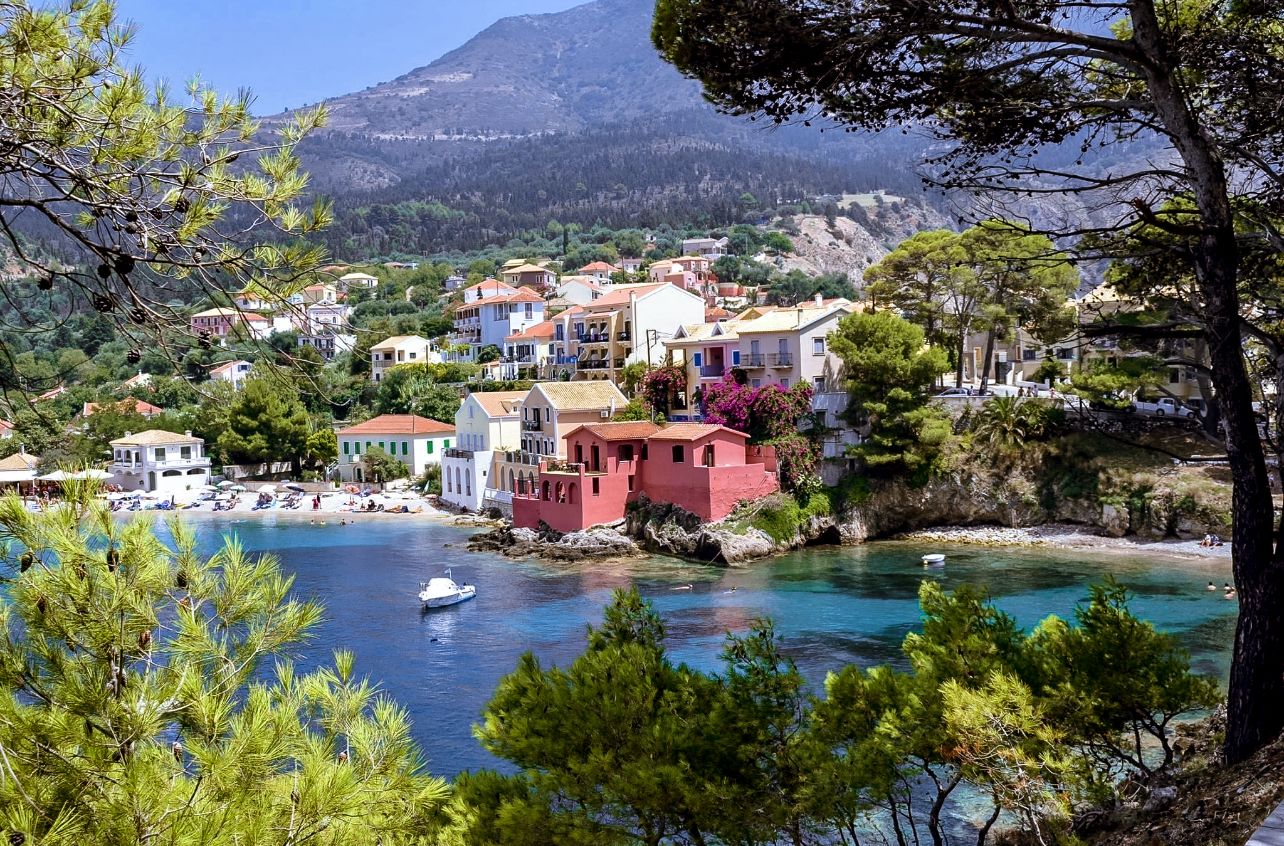
➤ The cosmopolitan picturesque Fiscardo, a traditional village that survived the devastating earthquake of 1953.
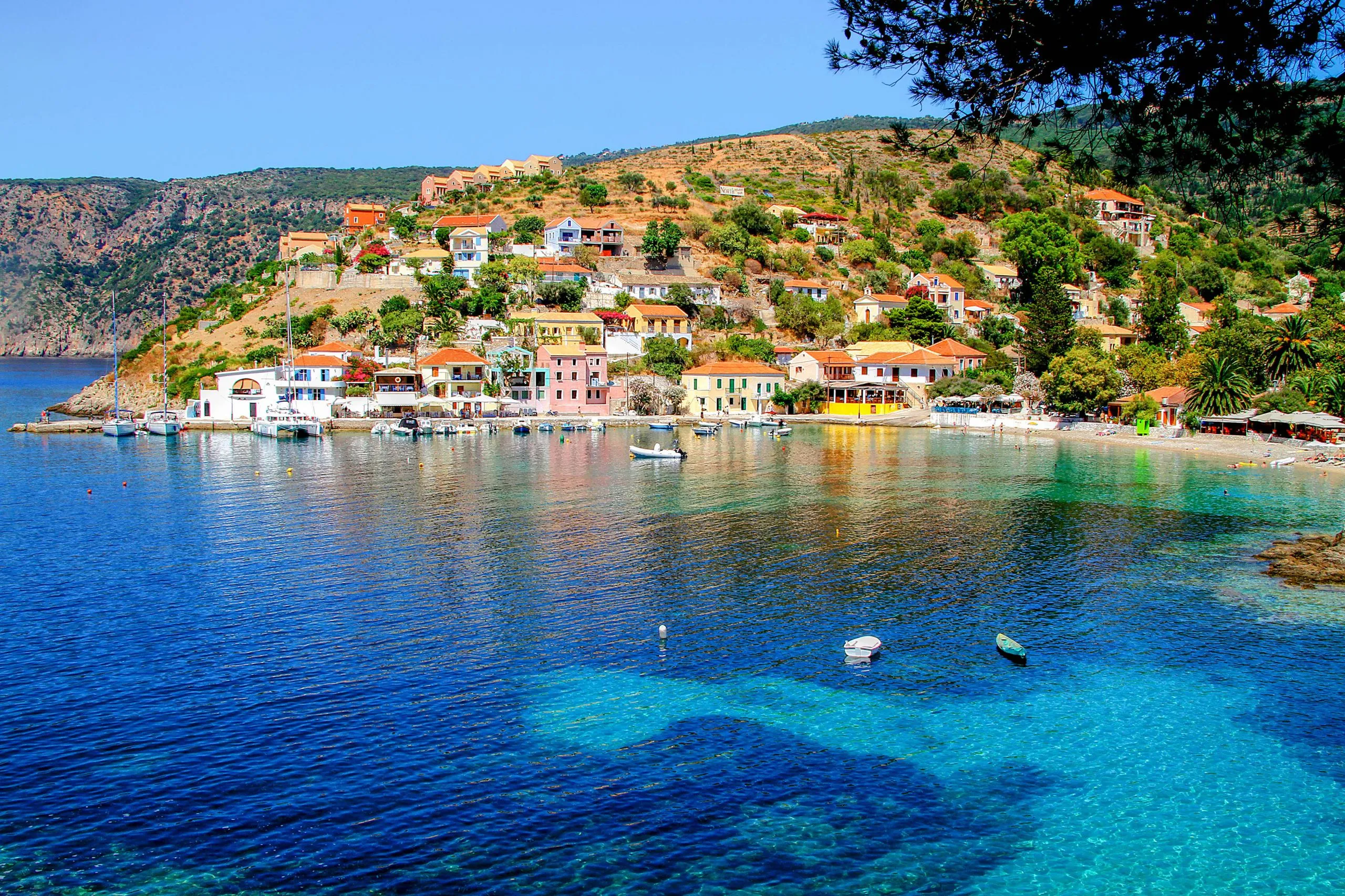
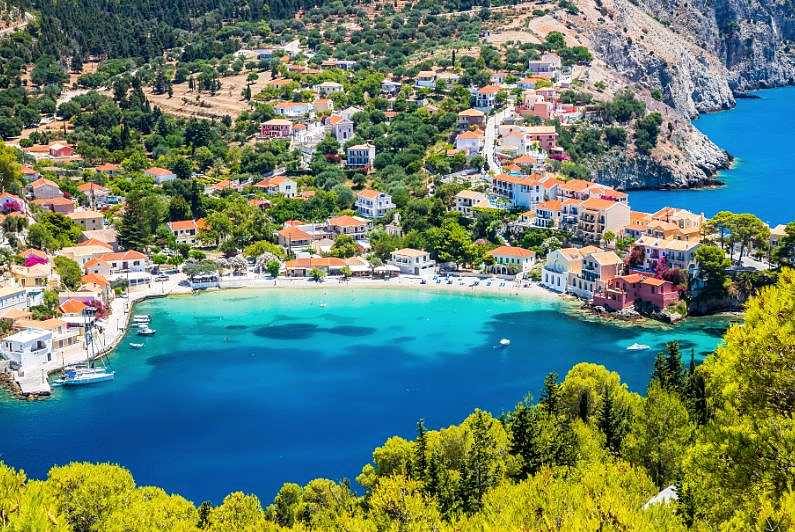
➤ The traditional and enchanting village of Assos and its Venetian castle.
The visitor can enjoy swimming at one of the nearby beaches such as:
Emplisi, Dafnoudi, Foki, Agia Jerousalem, and Assos beach.
In Sami/Agia Efimia and surrounding area one could visit:
➤ The famous Underground Lake of “Melissani” (on the outskirts of Karavomylos village just 2 km from Sami)
➤ The imposing Cave “Drogarati” (3 km from Sami to the south)
➤ The Acropolis of the Ancient Sami and the ruins of the monastery of “Agioi Fanentes” (3 km from Sami to the east)
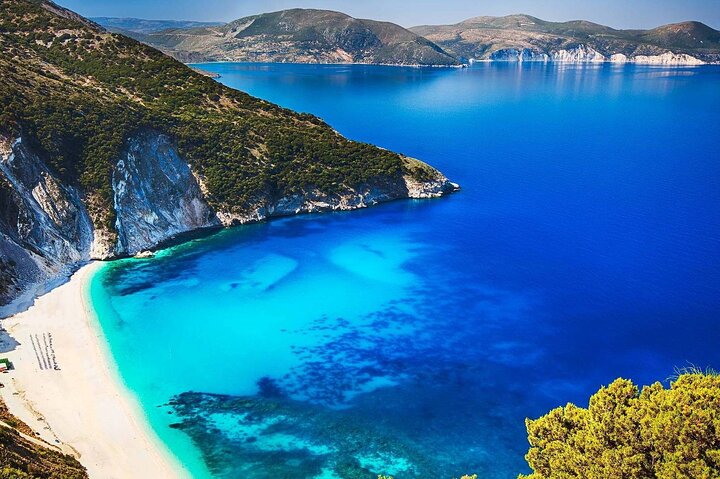
➤ The famous “Myrtos Beach” (8 km from Agia Efimia) for incredible photos
The visitor can enjoy swimming at one of the nearby beaches such as,
Myrtos Beach, the most beautiful and famous beach of the island,
Antisamos a unique beach near Sami (3km to the east) or
at Sami Beach,Karavomilos beach, Agia Paraskevi Beach, Agia Efimia, etc.
In Lixouri area and the peninsula of Paliki:
➤ The Iakovatos Library in the town of Lixouri.
➤ The Monastery of Kipouria, at a breathtaking location at the western part of the island. (15 km from Lixouri)
➤ The Monastery of Koronato (5 km from Lixouri)
➤ The famous “Kounopetra” (also known as the “moving rock”) (14 km from Lixouri)
The visitor can enjoy swimming at one of the nearby beaches like
Lepeda (3 km from Lixouri),
Xi Beach (famous for the red colour sand) (11 km from Lixouri),
Megas Lakkos (10 km from Lixouri),
Petani Beach which is probably the most beautiful beach in this area (about 18 km from Lixouri),
Porto Atheras a picturesque beach about 20 km to the north of Lixouri,
Platia Ammos For the more adventurous and those who have strength or can combine walking and climbing to and from the beach. (near Kipouria Monastery)
Traditional Cuisine
In Kefalonia, one can enjoy the traditional Greek cuisine and also gourmet dishes from the International cuisine.
Before anyone leaves the island we suggest to taste the “Kefalonian meat-pie” and drink “Robola” (the famous Kefalonian wine).
Also take with you "Mantoles" and "Mantolato" (Traditional Kefalonian sweets).
How to get to Kefalonia
By Plane: Kefalonia has an international airport with regular flights.
By Boat: Ferries are available from various ports in Greece.